Does anyone ask the buyers how they want to hold title to the house?
Published 17 days ago • 6 min read
Reader,
How Will Your Buyers Take Title?
Two buyers, not married, buying a house together. Only one of them qualifies for the loan. At closing, the deed vests title in both of them as joint tenants with right of survivorship.
Three years later, the borrower dies. The survivor now owns the whole house, and the borrower’s estate still owes the loan. The survivor has every reason to keep the payments current, since the lender can foreclose if they stop. But now two unrelated families are tied to one house and one debt, and that gets more than a little complicated.
One conversation before closing could have changed that.
This is an important question but no one seems to ask it
Most agents don’t see vesting as their job. It feels like attorney territory, and in one sense it is: explaining which option fits a buyer is legal advice. So the agent leaves it to the closing attorney, and the closing attorney, who in a financed deal represents the lender, works from the names on the contract and the loan file.
When buyers share a last name, or the attorney knows they’re married, the usual default is joint tenants with right of survivorship. For a married couple, that’s often what they would have chosen anyway. For unmarried co-buyers, a parent buying with an adult child, or friends pooling money for a first house, the default may not fit, and the owners find out after someone dies or the relationship ends.
You don’t have to answer the question to help. Asking how your buyers plan to take title, and making sure the buyers, the closing attorney, and if needed an estate-planning attorney talk it through before closing, is a huge help to your buyers and prevents the surprises that come later.
Owners can change how they hold title any time with a new deed, but closing is the time to get it right. Save later deeds for a change in circumstances.
The Ways Title Is Held in Georgia
You don’t need to advise anyone on this, but you do need to know the options well enough to recognize when a buyer should ask about them.
• Sole ownership. One owner. At death, the property goes through that owner’s estate.
• Tenants in common. The default deed when there’s no survivorship language. Each owner’s share passes through their own estate, not to the co-owners.
• Joint tenants with right of survivorship. When one owner dies, the survivor owns the property automatically, without probate, even if the will says otherwise.
• Transfer on death deed. Names a beneficiary who takes title after the owner dies, once the beneficiary records an acceptance affidavit. It’s an estate-planning deed, and it doesn’t belong in a purchase closing. More on that below.
Strategy 1: Ask the Question Before Closing, and Let the Right Person Answer It
Your job is to make sure the question gets asked. It isn’t your job to answer it.
Raise it early enough that the buyers have time to get guidance before closing day. Then tell the closing attorney the buyers have questions about vesting.
Say it like this: “The closing attorney can give you general information about the ways to hold title. If you need specific guidance for your situation, that’s a question for an estate-planning attorney, before closing.”
Now your buyers know they have a choice and who to ask.
Adding someone at the closing table. Every so often a buyer arrives at closing wanting to add a parent, a partner, or a friend to the deed. That’s best prepared in advance, with the lender and the closing attorney in the loop, and adding someone who isn’t a spouse to title violates the due-on-sale clause in the mortgage. When a buyer mentions adding someone, tell the lender and the closing attorney.
Strategy 2: Unmarried Co-Buyers Need Two Questions Answered
With unmarried co-buyers, “it depends” is the honest answer, and these two questions are what it depends on:
• Do they have an agreement in place to address a break-up? Who stays, who gets bought out, at what price, and who pays the mortgage in the meantime.
• Are they co-borrowers, or is only one of them the borrower? This is the one that produces the opening scenario. Done wrong, one person (or their estate) is stuck with the loan while the other gets sole title to the property.
You don’t need the answers. The buyers do, and they need them before the deed is recorded. Asking the questions out loud is often the first time the buyers realize there’s anything to decide.
The same goes for any co-owners who aren’t married to each other: a parent buying with an adult child, siblings, friends. Marriage comes with inheritance rights and a dedicated court process if the relationship ends. Co-owners without that should give much more thought to how they hold title together.
Strategy 3: A Transfer on Death Deed Is Not a Purchase Deed
Buyers hear about transfer on death deeds from friends, podcasts, and social media, and some ask whether they can “just do one of those” at closing to skip probate. The answer is no.
At closing, the seller conveys the property to your buyers. That’s the purchase deed. A transfer on death deed is a separate document the owner signs to name who receives the property after the owner dies. It’s a piece of an estate plan, and the person who should decide whether it fits is the owner’s estate-planning attorney, who knows the rest of that plan.
A deed is both a transfer and a legal strategy. At closing, we know the transaction. We don’t know the client’s family goals, tax and creditor exposure, Medicaid planning, marital situation, or the family dispute waiting to happen. A TOD deed that makes sense in isolation can work against the rest of an estate plan.
The law itself is also still settling. Georgia’s transfer on death statute (O.C.G.A. § 44-17-1 et seq.) took effect in 2024 and had to be rewritten in 2026 by HB 413 to correct problems in the first version. Even after the revision, open questions remain, with little or no case law to answer them yet. That’s not a place for an agent to improvise.
Say it like this: “A transfer on death deed is part of an overall estate plan, not something we decide at closing. Your estate-planning attorney is the right person to say whether one fits your plan.”
What Good Looks Like
Unmarried co-buyers, only one on the loan:
To the buyers: “Before closing, the two of you should decide how you’ll hold title, and talk through what happens if one of you dies or you split up. The closing attorney can give you general information about the options. For guidance on your situation, an estate-planning attorney is the right call, and there’s time to do that before closing.”
To the closing attorney, with the contract: “Buyers are unmarried co-buyers, and only [Buyer A] is on the loan. They have questions about how to take title. Please reach out to them before the deed is prepared.”
Send both early, while there’s still time to act on the answers.
Join the Live Zoom Class
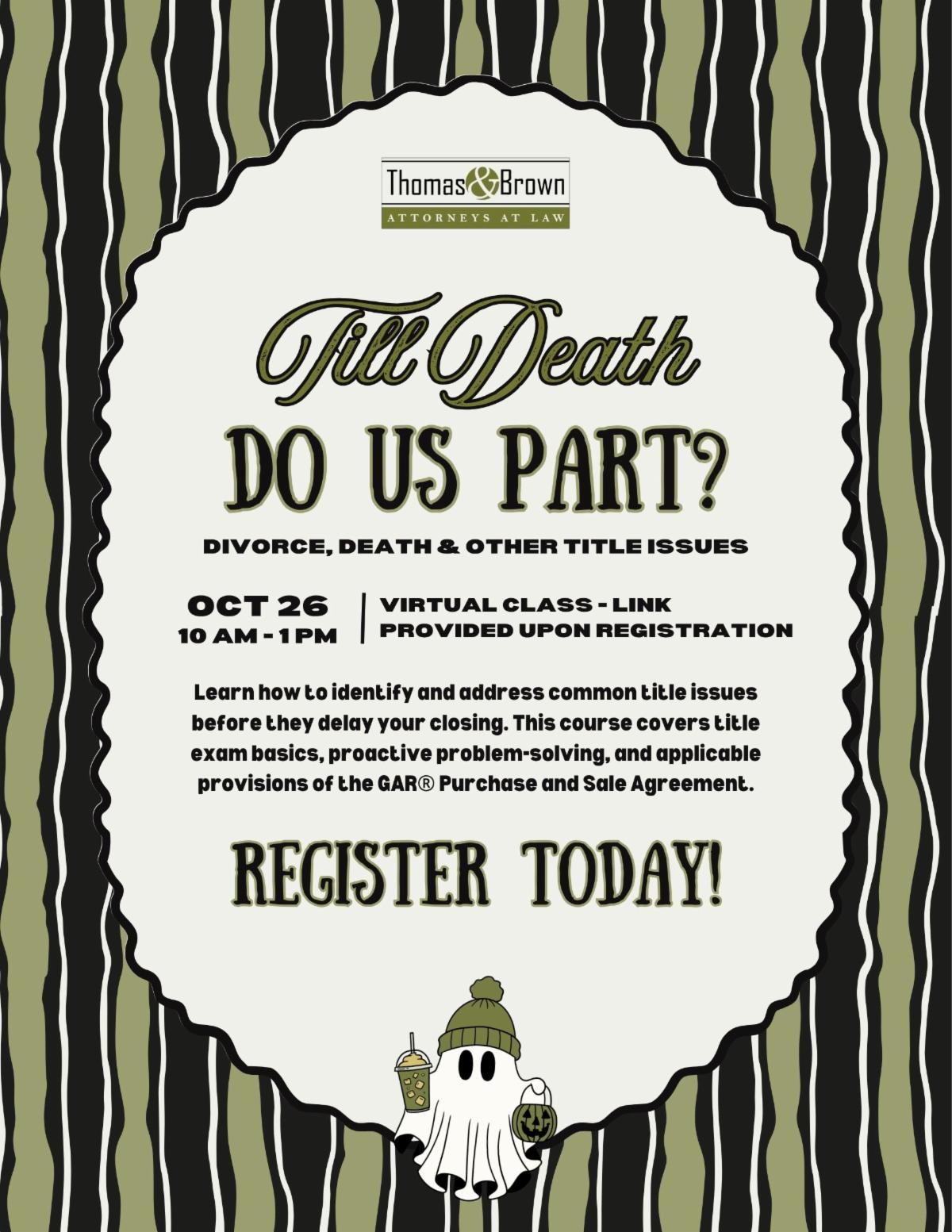
Vesting is one piece of Till Death Do Us Part? Divorce, Death & Other Title Issues, along with probate, divorce, trusts, POAs, and who can sign.
When: Monday, October 26, 2026, 10:00 a.m. to 1:00 p.m. Eastern
What happens if the deed doesn’t say how co-owners hold title? Without the survivorship language, co-owners hold as tenants in common. Each owner’s share goes through their own estate when they die, not to the other owner.
Can a real estate agent tell buyers how to take title? No. Tell them they have a choice, then refer them to the closing attorney for general information and an estate-planning attorney for specific guidance.
Can buyers receive title through a transfer on death deed at closing? No. The purchase deed conveys the property from the seller to the buyers. A transfer on death deed is a separate estate-planning document the owner may sign to name who receives the property after death, and whether to use one is a question for the owner’s estate-planning attorney.
⚠️ REALsmart Reminder
How title is held decides who owns the house when someone dies. Asking how your buyers will take title, and making sure it gets discussed before closing, prevents surprises later. Ask early, send it to the closing attorney and the estate-planning attorney, and keep the transfer on death deed in the estate plan where it belongs.
.📥 Download / Tool / Resource
Want the one-page “How Will You Take Title?” conversation checklist? Reach out at cherylking@realsmartonline.com and I’ll send it your way. Have a vesting situation you want a read on? Same address, and I’ll keep your name out of it if it turns into a future write-up.